World & Lore
TERMINUS VEIL
Who Is Badia Jassim? A Character Deep Dive
 ·
·
5 min read
·
·
5 min read
 ·
·
5 min read
·
·
5 min read
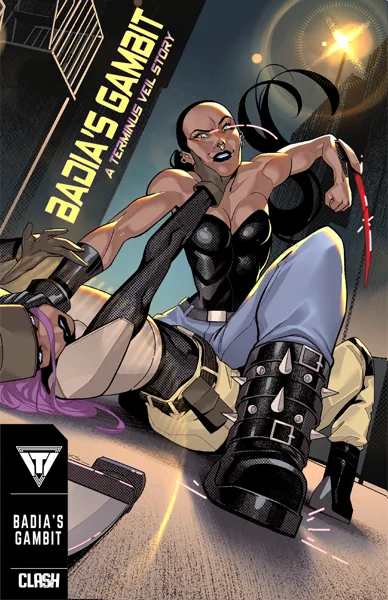
Let me be real with you. When I created Badia Jassim, she was a supporting character. A piece of the puzzle in Terminus Veil's larger operative network. She had a few scenes, a couple of sharp lines, and a backstory I thought I'd never need to flesh out. That was the plan.
Plans are funny like that.
Readers latched onto Badia almost immediately. Not because she was the loudest character on the page or the most powerful. It was something else — something quieter. People kept asking about her. Who is she really? What happened before we met her? What's she doing when the main cast isn't looking? That's when I knew she needed her own story.
Badia's Gambit is that story. A one-shot. Self-contained. You don't need to know a single thing about Terminus Veil to pick it up and understand every page. That was non-negotiable for me.
Here's what makes Badia different from most covert operatives you've seen in fiction: she's not cynical. Not yet. She's sharp, methodical, and dangerously competent — but she still believes in the mission. She still thinks the agency she works for is doing the right thing.
And then she discovers it's compromised.
"The moment Badia realizes the people who trained her are the same ones she should be hunting — that's the hinge. Everything after that is a different story."
That discovery doesn't break her. That's important. A lot of writers would use that moment to turn the character dark or have her spiral. But that's not Badia. She processes it, she recalibrates, and she makes a choice. The choice is what defines her — not the betrayal.
Free digital comic + behind-the-scenes drops. One email per week, max.
No spam. Unsubscribe anytime.Every story I write has an armature — a core truth the entire narrative hangs on. For Badia's Gambit, it's this: your past doesn't define your future.
Badia was shaped by her agency. Trained by them. Her skills, her instincts, her network — all of it came from an institution she now knows is rotten. Most people in that position would either deny the truth or assume they're rotten too. Guilt by association.
Badia doesn't do either. She takes what she learned, owns the fact that she learned it from flawed people, and uses it to build something different. She's not running from her past — she's just refusing to let it be the ceiling.

I think that's why people connected with her before the one-shot even existed. There's something universal about inheriting a system you didn't build, realizing it's broken, and having to decide what to do next. We've all been there in some form. Badia just happens to make that decision while being hunted.
The hardest part of writing Badia's Gambit wasn't the action or the plot twists. It was making sure someone who's never read Terminus Veil could pick this up cold and feel everything they need to feel.
Quick note: Badia's Gambit requires zero backstory. If you've never touched Terminus Veil, you're actually the ideal reader — you'll experience Badia's world exactly as she experiences it in this story: with no safety net.
A one-shot is its own discipline. You don't have six issues to build a character. You get one sitting. Every panel has to earn its space. Every line of dialogue has to do double duty — revealing character while pushing plot. There's no room for setup that doesn't pay off.
I approached it like a short film. Cold open, tight escalation, a pivot point that reframes everything you've seen, and a resolution that feels earned without feeling rushed. The pacing was engineered. I'm a software engineer by day — I think in systems. And a good one-shot is a system: every component has a function, and if you remove one piece, the whole thing should feel incomplete.
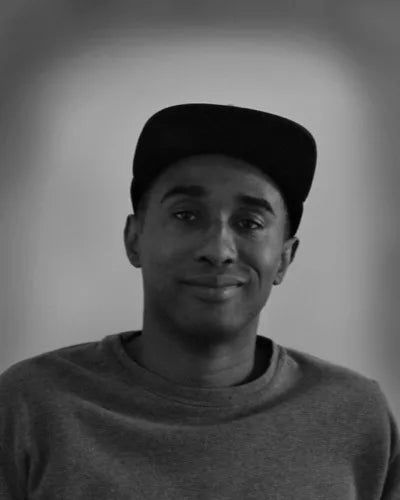
I'm going to get personal for a second. Badia matters to me because she represents something I think about constantly: the difference between where you came from and where you're going.
I spent years in a career that wasn't wrong for me, but wasn't the full picture either. Engineering gave me tools — problem-solving, systems thinking, discipline. But it took me a long time to realize that creativity wasn't a side hobby. It was essential. It was how I stayed well.
Badia's version of that is more dramatic — covert ops, institutional betrayal, actual danger — but the core is the same. You can honor what made you without being imprisoned by it. You can use the tools you were given to build something the people who gave them to you never intended.
That's the gambit. That's always been the gambit.
If you read one thing from Clash Studios this year, make it Badia's Gambit. Not because I'm telling you to — because she'll earn it. One sitting. No prerequisites. Just a tight, brutal story about a woman who decides her future is hers to write.
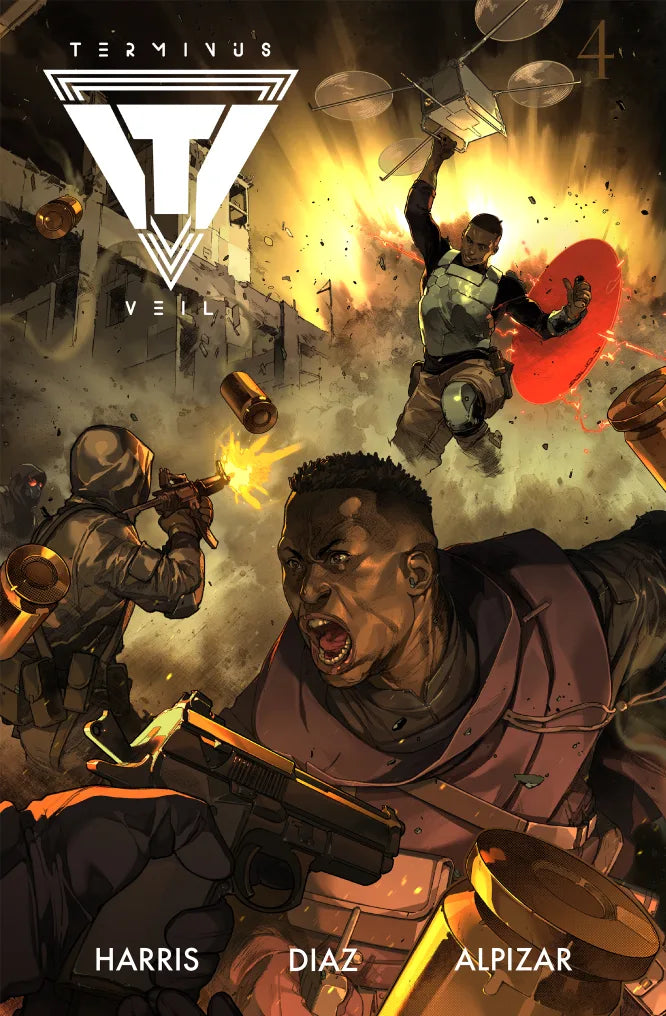
6 issues of espionage, betrayal, and no clean hands. Digital or physical.
Shop Now →